
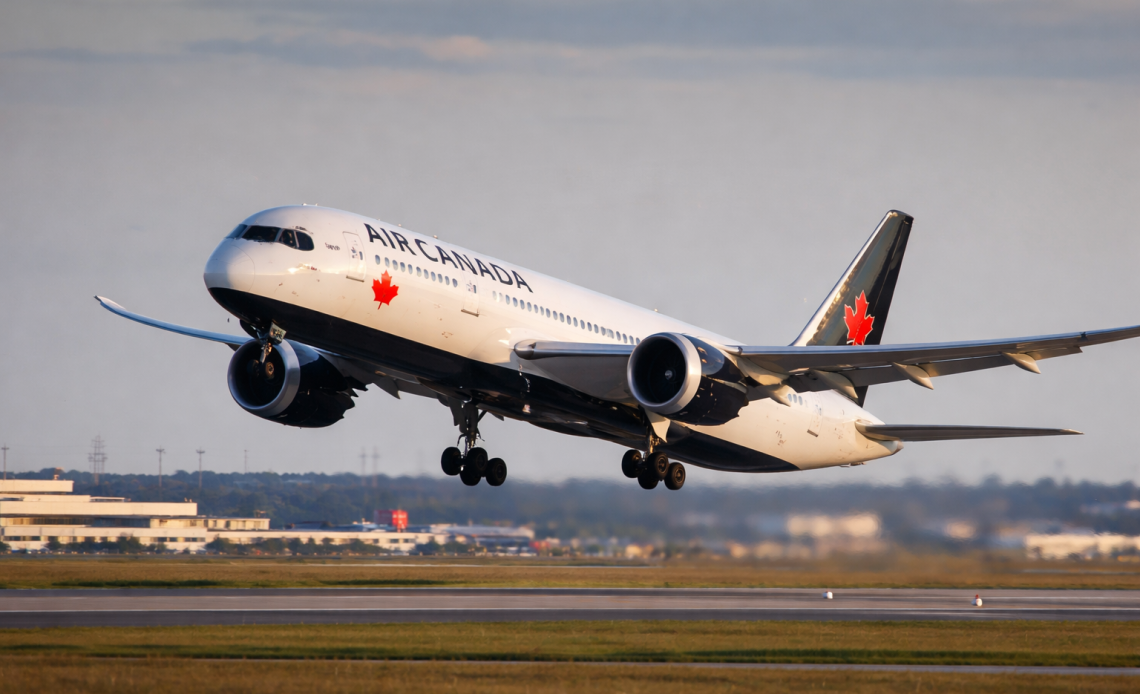
Air Canada stock price has retreated in the past few weeks, mirroring the performance of other airlines, which have tumbled as the Iran war started. AC dropped to $17.35 on Friday, down by about 20% from its highest point this year.
Other airline stocks have also dropped, with the closely-watched US Global Jets ETF (JETS) falling to $22, down from the year-to-date high of $31.25.
Air Canada stock will be in the spotlight today after one of its planes was involved in an accident in New York that left two people dead.
Iran war to affect Air Canada’s business
Air Canada, the giant Canadian airline company, is facing major turbulence as the Iran war continues.
The main challenge the company is facing is that jet fuel prices have jumped, mirroring the performance of energy prices. Brent and the West Texas Intermediate (WTI) have jumped to $112 and $100, respectively.
As a result, according to IATA, the average jet fuel price has jumped to 175 a barrel, up by 62% from the previous month. Fuels in North America rose to $182c up by 54% from the previous month.
The rising fuel prices have an impact on airlines because they are the biggest cost the companies face. This situation is more notable to airlines that have not hedged their fuel costs.
This surge has interfered with Air Canada’s strong momentum, which it demonstrated in the last financial results. The company’s business is also being affected by its Middle East routes, which have slowed as the war continues.
The results showed that Air Canada delivered operating revenue of $5.8 billion, a record level. It also revealed that its operating income jumped to $918 million.
More metrics continued to improve, a sign that the impact of the trade conflict between the United States and Canada has had no impact on its operations. Also, it delivered strong numbers despite a strike that happened during the summer.
Air Canada’s revenue for the year came in at $22.3 billion, while its operating expenses jumped to $21.4 billion, giving it an operating income of $918 million. Its net income was over $644 million.
The company expects that its business will have an adjusted EBITDA of between $3.35 billion and $3.75 billion, while its free cash flow will be between $400 million and $800 million. This growth will accelerate, with its revenue getting to $30 billion in 2030, while the adjusted EBITDA will be between 18% and 20% by then.
There are signs that the company has become overvalued compared to other airlines. It has a forward price-to-earnings ratio of 11, higher than United Airlines’s 7.3, Delta’s 9.56, and American Airlines’s 6.3.
Air Canada stock price prediction: Technical analysis
AC stock chart | Source: TradingView
The daily chart shows that the Air Canada stock price has crashed in the past few weeks, moving from a high of $21.6 in February to the current $17.4.
It is trading at a crucial support level, which coincides with the lowest swing in October last year.
The stock has dropped to the Strong pivot reverse point of the Murrey Math Lines tool. If also dropped below all moving averages, and is slowly forming a bearish pennant pattern.
Therefore, the stock will likely resume the downward trend in the coming days, potentially to the year-to-date low of $16.40. A drop below that support will point to more downside, potentially to the psychological level at $15.
On the positive side, the ongoing Iran war will not last forever. As a result, companies that have plunged during the war will likely reverse upwards once the war ends.
The post Air Canada stock faces turbulence as headwinds rise: what next? appeared first on Invezz